
WELCOME BONUS 300%
UP TO €2000 + 100
FREE SPINS
UP TO €2000 + 100
FREE SPINS
Home → Roulette
Roulette at Lottoland Casino
Too High a Bet for a 50 EUR Bankroll
The maximum stake of 5,000 EUR on Lightning Roulette or Quantum Roulette exceeds the limits suitable for conservative bankroll management. A player starting with only 50 EUR faces immediate risk if attempting to place even a single maximum wager, as it would deplete the entire balance instantly. This constraint forces low-balance players to utilize the minimum bet of 0.10 EUR to extend their session duration significantly.
Standard European Roulette offers a house edge of 2.70%, which is lower than the 5.26% found on American Roulette wheels. The additional double zero on the American variant increases the casino's advantage, making it less favorable for players trying to preserve a small bankroll over many spins. Consequently, avoiding the American table is essential for maintaining capital efficiency during extended play sessions.
Betting on inside numbers like Straight bets pays 35:1 but carries high volatility compared to outside bets such as Red/Black at 1:1. A player with 50 EUR should focus on outside bets to withstand variance better than chasing large payouts from single number hits. This strategy helps mitigate the rapid depletion of funds that occurs when targeting high-multiplier outcomes on limited capital.
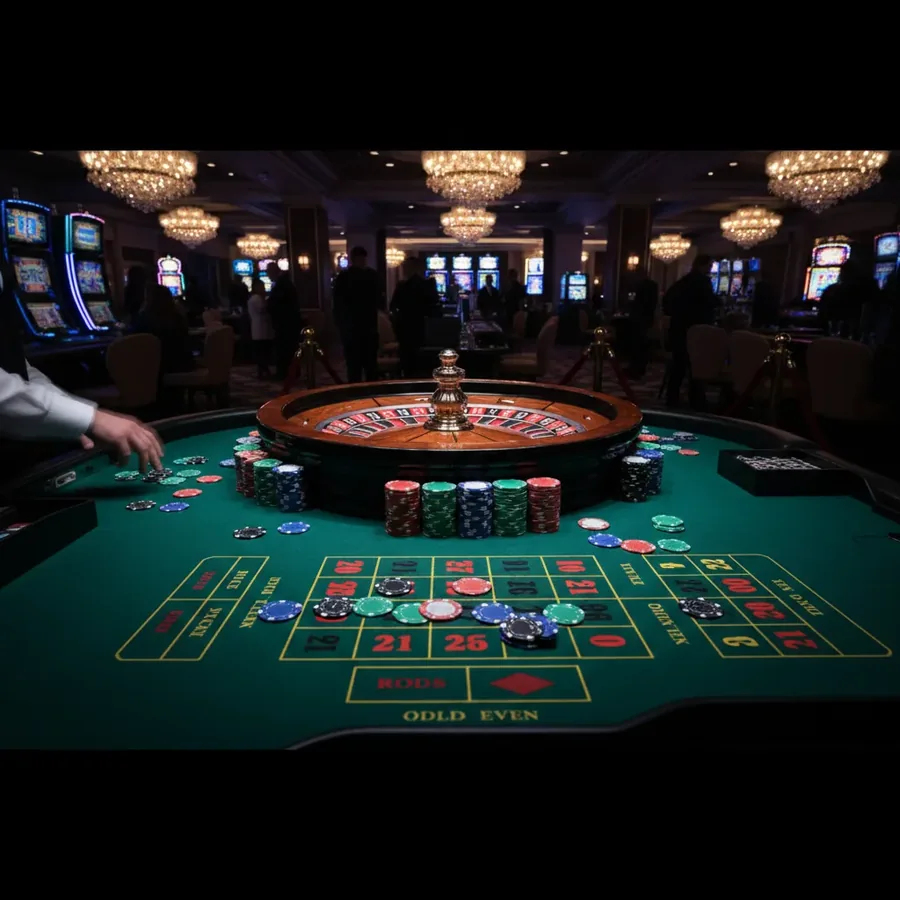
Error: Using Opposite Bets for Wagering Fulfillment
Table games contribute only 10% toward the bonus turnover requirement, meaning players must wager ten times more than slot contributions to clear the offer. Attempting to fulfill this using opposite bets on Even Chances, such as betting both Red and Black simultaneously, fails to generate net positive results effectively. This method often results in losses due to the house edge without efficiently reducing the remaining wagering obligation.
The 300% welcome bonus up to 2,000 EUR requires significant turnover before any withdrawal is permitted under standard terms. Since roulette contributes minimally, relying on it for wagering fulfillment demands much larger total bets compared to other game categories. Players ignoring this contribution rate may find themselves unable to withdraw winnings despite meeting the nominal turnover figure.
Lightning Roulette features multipliers up to 500x on straight bets, creating extreme volatility that complicates steady wagering progress. While exciting, these high-variance outcomes disrupt the consistent progression needed for clearing bonuses through table games efficiently. It is advisable to use higher-contribution games for the bulk of wagering rather than risking stability on volatile roulette variants.
Even Chances 1:1 on 18 Numbers
European Roulette covers 18 winning numbers on even chances like Red/Black, resulting in an RTP of 97.30% and a house edge of 2.70%. This statistical profile remains constant across all bet types because the payout ratios are fixed relative to the 37 sectors on the wheel. Players benefit from predictable long-term returns compared to variants with higher house advantages.
American Roulette introduces a double zero, expanding the wheel to 38 sectors while keeping payouts identical to the European version. This structural change doubles the house edge to 5.26%, significantly reducing the expected return for players betting on even chances. The Five Number Bet on the American wheel is particularly dangerous, carrying a massive 7.89% house edge.
French Roulette with La Partage improves the RTP for even chances to 98.65% by returning half the stake on zero. This rule applies exclusively to outside bets like Red/Black, Odd/Even, and Low/High, leaving inner bets unaffected at the standard 2.70% edge. Players prioritizing value should seek out this specific variant to minimize losses on balanced wagers.
Quantum Roulette: Which Numbers Get Multipliers
Playtech's Quantum Roulette applies random multipliers ranging up to x500 to specific straight bets before each spin begins. These multipliers target one to five numbers randomly, offering substantial potential payouts on otherwise standard 35:1 bets. The base RTP remains stable, but individual spins can yield exceptional returns depending on where the quantum feature lands.
Evolution's Lightning Roulette similarly awards multipliers between 50x and 500x to one to five lightning-struck numbers per round. This mechanic creates opportunities for significant wins on straight bets, provided the player correctly predicts the highlighted sectors. The presence of these multipliers adds excitement but does not alter the underlying house edge of 2.70% on the base game.
Pragmatic Play Live's PowerUP Roulette differs by awarding multipliers to three to five numbers, with maximum wins reaching 15,525x. This variant offers a slightly different multiplier structure compared to its competitors, potentially impacting strategic betting approaches. Players monitoring these features can adjust their straight bet sizes to capitalize on high-multiplier rounds effectively.
Bankroll for 40x Wagering with 10 Percent
A 300% welcome bonus up to 2,000 EUR on a 50 EUR deposit generates a 150 EUR bonus, totaling 200 EUR in playing funds. With a 40x wagering requirement applied to the bonus amount, players must generate 6,000 EUR in turnover before withdrawing winnings. This calculation assumes the bonus funds are subject to the full wagering multiplier independently of the deposit.
Since table games contribute only 10% to the wagering requirement, generating 6,000 EUR in eligible turnover requires actual bets of 60,000 EUR. Playing European Roulette at an average bet of 1 EUR means executing approximately 60,000 spins to meet the condition. This volume highlights the inefficiency of using low-contribution games for bonus clearance.
Slots typically contribute 100%, allowing players to clear the same 6,000 EUR requirement with only 6,000 EUR in actual bets. Choosing slots over roulette reduces the required action by a factor of ten, preserving the bankroll against the house edge. Strategic players should prioritize high-contribution games to fulfill wagering obligations more quickly and safely.
Roulette bet types at a glance
| Bet | Payout | Win Chance | Numbers Covered | House Edge |
|---|---|---|---|---|
| Roulette Europäisch (einfache Null, 37 Sektoren) | Straight 35:1, Split 17:1, Street 11:1, Corner 8:1, Six Line 5:1, Dozen 2:1, Column 2:1, Rot/Schwarz 1:1, Odd/Even 1:1, 1-18/19-36 1:1 | 97.30% | 37 Sektoren (1–36 + 0); Auszahlungen wie für 36 Sektoren – daher konstanter Edge auf ALLE Wetten | 2.70% |
| Roulette Amerikanisch (doppelte Null, 38 Sektoren) | Straight 35:1, Split 17:1, Street 11:1, Corner 8:1, Six Line 5:1, Dozen 2:1, Column 2:1, Rot/Schwarz 1:1 | 94.74% | 38 Sektoren (1–36 + 0 + 00); Auszahlungen wie beim europäischen Rad, aber der zusätzliche Sektor verdoppelt den Hausvorteil | 5.26% |
| Roulette Französisch mit La Partage (gerade Chancen) | Rot/Schwarz 1:1 (bei 0 Rückerstattung 50%), Odd/Even 1:1, Low/High 1:1; Innere Einsätze ohne La Partage: Straight 35:1, Split 17:1, Street 11:1, Corner 8:1 | 98.65% | Bei 0 wird die Hälfte des Einsatzes auf gerade Chancen zurückerstattet (Rot/Schwarz, Pair/Impair, Manque/Passe). En Prison gibt denselben 1,35%. Regel gilt NUR für gleiche Einsätze | 1.35% |
| Roulette Französisch, innere Einsätze (La Partage gilt nicht) | Straight 35:1, Split 17:1, Street 11:1, Corner 8:1, Six Line 5:1, Dozen 2:1, Column 2:1 | 97.30% | Rad gleich (37 Sektoren), aber La Partage/En Prison gilt nicht für innere Einsätze – Edge bleibt europäisch | 2.70% |
| Roulette Amerikanisch – Five Number Bet (0, 00, 1, 2, 3) | Five Number 6:1 (deckt 5 von 38 Sektoren) | 92.11% | Einzige Wette am amerikanischen Rad mit Edge über 5,26% – „Fallenwette“. Kein Äquivalent am europäischen Rad | 7.89% |
Which Table Fits a 30 Euro Balance
The European Roulette variant features a single zero on thirty-seven sectors, establishing a house edge of 2.70% and an RTP of 97.30%. This mathematical structure ensures that the theoretical return remains consistent across all betting fields, including straight bets paying 35 to 1 and dozen bets paying 2 to 1. A player with a 30 Euro balance can sustain significantly more spins compared to the American version, which carries a higher 5.26% edge due to its double zero sector.
The American Roulette wheel introduces a second zero, expanding the layout to thirty-eight sectors while maintaining identical payout structures for standard wagers. This additional green pocket doubles the casino's advantage to 5.26%, reducing the expected return to 94.74% for every unit wagered on the table. Consequently, a 30 Euro bankroll depletes approximately twice as fast here than at the European table, forcing high rollers to adjust their stake sizes to maintain longevity.
Table game contributions count for only ten percent toward the 300% welcome bonus requirement, which caps at two thousand Euros plus one hundred free spins. Since roulette contributes minimally to the turnover target, players must place larger total stakes to clear the wagering conditions effectively. This restriction means that a 30 Euro balance requires substantial volume to unlock the bonus funds, making low-limit tables less efficient for bonus hunting compared to slots.
Mobile Tables: Which Betting Fields Become Smaller
Lightning Roulette by Evolution operates on a thirty-seven sector European wheel, offering multipliers between fifty times and five hundred times on selected numbers. The interface condenses the betting grid to fit mobile screens, but the core payout structure remains unchanged with straight bets paying 35 to 1 and split bets paying 17 to 1. High rollers using smartphones must navigate this compact layout carefully to place complex combination bets without accidental misinputs during live sessions.
Quantum Roulette developed by Playtech allows stakes ranging from ten cents up to five thousand Euros, featuring quantum multipliers that reach up to five hundred times. The mobile display shrinks the number board, requiring precise touch inputs for inside bets like corners paying eight to one or streets paying eleven to one. Players should verify their bet confirmations frequently, as the reduced visual area increases the risk of placing incorrect wagers on the smaller interactive fields.
PowerUP Roulette by Pragmatic Play Live utilizes three to five enhanced numbers with maximum wins reaching fifteen thousand five hundred twenty-five times the stake. The mobile version restricts the visible betting options, often hiding lesser-used side bets to prioritize the main wheel interactions. With an RTP of 97.19%, the game maintains standard payouts such as dozens paying 2 to 1, but the cramped interface demands heightened attention to detail when managing large stakes on narrow screens.
Live Table vs RNG Table: Rounds per Hour
Live Quantum Roulette hosted by Playtech typically processes between sixty and eighty rounds per hour, depending on dealer speed and multiplier activations. Each spin involves physical ball release and digital overlay calculations, creating a slower pace compared to random number generator versions. High rollers relying on rapid turnover strategies may find this tempo limiting, as the extended duration between bets reduces the total number of opportunities to apply betting systems within a fixed session timeframe.
RNG European Roulette generates outcomes instantly via algorithmic verification, allowing for potentially hundreds of spins per hour without human intervention. The absence of physical ball mechanics and dealer procedures accelerates the gameplay significantly, enabling faster progression through wagering requirements. However, the lack of social interaction and physical randomness may deter some players who prefer the transparency and atmosphere associated with live dealer studios providing real-time action.
The contribution rate for both live and RNG roulette variants remains constant at ten percent toward the bonus turnover, regardless of the speed of play. A player completing four thousand Euros in turnover through fast-paced RNG games achieves the same bonus clearance status as those playing slowly at live tables. This equivalence ensures that time management does not impact bonus eligibility, allowing high rollers to choose their preferred pace without financial penalty regarding the three hundred percent match offer.
Straight 35:1 vs Dozen 2:1 Hit Rate
A straight bet on any single number in European Roulette pays thirty-five to one, covering only one out of thirty-seven possible outcomes. This results in a hit frequency of approximately 2.70%, meaning the wager succeeds roughly once every thirty-seven spins on average. High rollers utilizing this strategy face high volatility, requiring substantial bankrolls to withstand long losing streaks before hitting the lucrative thirty-five to one payout.
Dozen bets cover twelve numbers each, offering a payout of two to one with a hit frequency of approximately 32.43% per spin. This strategy provides more frequent returns, stabilizing the bankroll against the immediate impact of variance compared to straight bets. While the individual wins are smaller, the higher probability of success makes it suitable for players seeking longer session durations with lower risk exposure on each individual outcome.
Comparing the two approaches reveals that dozen bets generate wins nearly twelve times more frequently than straight bets, albeit with significantly lower individual payouts. The house edge remains constant at 2.70% for both types in European Roulette, ensuring the long-term expectation is identical regardless of selection. Players must decide whether they prefer the thrill of rare large wins or the stability of frequent moderate returns based on their personal risk tolerance and capital availability.
Why the Ball Has No Memory
Each spin of the European Roulette wheel is an independent event with a fixed probability of 1/37 for landing on any specific number. Previous outcomes do not influence future results, debunking the gambler's fallacy that hot or cold numbers will eventually correct themselves. This statistical reality ensures that the house edge of 2.70% remains constant regardless of the sequence of previous spins or apparent patterns observed by players.
American Roulette wheels contain thirty-eight sectors, increasing the house edge to 5.26% and further emphasizing the independence of each spin. The presence of the double zero alters the probability distribution but does not create memory effects, meaning past results have zero bearing on upcoming outcomes. High rollers must accept that no betting system can overcome this mathematical certainty, as every spin resets the probabilities to their original values.
The French Roulette variant with La Partage offers a reduced house edge of 1.35% on even-money bets, but the principle of independence still applies. When the ball lands on zero, half the stake is returned, yet this rule does not predict future zeros or non-zeros. Players relying on historical data to guide their wagers misunderstand the random nature of the game, where each spin stands alone without connection to prior events.
How Much Bonus Wager for 100 Euro Roulette Bet?
A single 100 € wager on European Roulette contributes exactly 10 € toward the 300% welcome bonus turnover requirement, as table games carry a 10 percent contribution rate. This means the player must generate 4,000 € in total betting volume to clear the maximum 2,000 € bonus credit derived from the initial deposit match. The low contribution percentage forces high rollers to place significantly larger bets compared to slot players who typically enjoy full credit toward wagering targets.
The disparity between table game and slot contributions creates a distinct mathematical barrier for clearing large bonus sums through roulette alone. While slots often count 100 percent, the 10 percent rule for tables like Quantum Roulette or Lightning Roulette requires ten times the nominal bet value to satisfy the same portion of the rollover. A player betting 5,000 € on Evolution's Lightning Roulette only advances the bonus clearance by 500 €, extending the time required to unlock withdrawable funds.
Wheel Speed and Ball Toss in Real Wheel
Live dealer studios such as Evolution's Lightning Roulette operate with a fixed mechanical wheel speed that ensures consistent ball toss timing across every session. The physical croupier manages the spin velocity directly, unlike digital RNG versions where algorithms determine outcomes without physical constraints. High rollers utilizing these real-wheel tables experience predictable pacing that aligns with professional casino standards rather than accelerated online play rates.
The visual realism of the ball toss adds a layer of scrutiny for players tracking wheel bias or dealer signatures over extended sessions. Unlike virtual simulations, the physical interaction between the ball and the frets introduces natural variance that cannot be algorithmically smoothed out. This mechanical authenticity appeals to serious players who prefer tangible evidence of randomness over purely software-generated results.
10 Percent Roulette vs 100 Percent Slots
Table games contribute only 10 percent to the wagering requirement, whereas most slot titles typically count at 100 percent toward the bonus clearance. This structural difference means that playing Quantum Roulette with Playtech limits is far less efficient for converting bonus funds into cash than spinning eligible video slots. A 100 € bet on a table game advances the turnover goal by merely 10 €, demanding substantially higher volume to reach the exit threshold.
The 10 percent restriction applies uniformly across all live roulette variants, including PowerUP Roulette by Pragmatic Play Live and standard French options. Players seeking to maximize bonus utility must either accept the slower conversion rate or allocate their bankroll primarily to slot machines instead. This policy effectively discourages high-volume roulette play solely for the purpose of unlocking restricted bonus credits quickly.
Statistics: 2.70 Percent of Every Bet
European Roulette maintains a house edge of 2.70 percent, which represents the statistical advantage retained by the operator on all wagers placed on the 37-sector wheel. This margin is significantly lower than the 5.26 percent found on American wheels featuring the double zero pocket. High rollers benefit from this reduced edge when focusing exclusively on single-zero tables available in the live casino section.
The 2.70 percent house edge applies to all standard bets on European Roulette, including straight-ups paying 35:1 and outside bets paying 1:1. However, certain specialized bets like the Five Number Bet on American wheels carry a much steeper 7.89 percent disadvantage, making them mathematically inferior choices. Players avoiding the American variant protect their bankroll from the inflated volatility associated with the additional green pocket.
French Roulette offers an even more favorable environment through La Partage rules, reducing the edge on even-money bets to just 1.35 percent. When the ball lands on zero, half the stake on Red/Black or Odd/Even is returned, effectively halving the standard European disadvantage for those specific wagers. This rule provides a strategic advantage for high-stakes players focusing on probability-based outside bets rather than risky inside combinations.
37 Pockets vs. 38 Pockets: The Difference
The European wheel features 37 pockets, comprising numbers one through thirty-six plus a single zero sector. This configuration establishes a baseline house edge of 2.70 percent across all betting types, offering a balanced risk profile for regular play. The absence of a double zero simplifies the probability calculations for players analyzing long-term return expectations.
In contrast, the American wheel expands to 38 pockets by adding a second green zero, known as the double zero or 00. This additional pocket increases the house edge to 5.26 percent, effectively doubling the casino's theoretical hold compared to the European version. High rollers often avoid this variant due to the accelerated erosion of their bankroll caused by the extra losing outcome.
The presence of 38 pockets fundamentally alters the payout structure for certain bets, particularly the Five Number Bet covering 0, 00, 1, 2, and 3. This specific wager carries a staggering 7.89 percent house edge, making it the most unfavorable option on any roulette table. Players sticking to standard European or French wheels avoid this trap entirely by never encountering the double zero sector.
Contact
Live - online chat
Banking









Providers












Lottoland Casino 2026